
The All India Muslim Personal Law Board (AIMPLB) has called for a nationwide 'lights out' protest from 9 PM to 9:15 PM on April 30 to oppose the amendments made to the Waqf Act. The AIMPLB spokesperson, SQR Ilyas, stated that the protest is a symbolic expression of solidarity against the 'discriminatory and constitutionally incompatible' amendments. The Board has been running a campaign against the amendments since April 10, organizing meetings and protests across the country.

The Special Bench of the Allahabad high court is likely to pronounce the verdict on the Ayodhya title suit at 3.30 pm on Thursday, September 30.
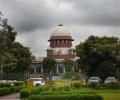
The Supreme Court of India will likely hear a batch of petitions challenging the constitutional validity of the Waqf (Amendment) Act, 2025 on April 15. The Act, which came into force on April 8, has been met with widespread criticism from various stakeholders, including politicians, the All India Muslim Personal Law Board (AIMPLB), and Jamiat Ulama-i-Hind. They argue that the law is discriminatory and violates the fundamental rights guaranteed under Articles 25 and 26 of the Constitution. The petitions allege that the amendments give the government more control over the administration of Waqf, effectively sidelining the Muslim minority from managing their own religious endowments.

A three-judge Supreme Court bench will hear petitions challenging the constitutional validity of the Waqf (Amendment) Act, 2025, on April 16. The petitions, including those by politicians and the All India Muslim Personal Law Board (AIMPLB) and Jamiat Ulama-i-Hind, were filed in the top court challenging the validity of the newly-enacted law. The Centre has filed a caveat in the apex court, seeking a hearing before any order is passed.

The Bill to amend the Wakf Act, 1995, will make it mandatory for Waqf boards to register their properties with district collectors to ensure their actual valuation.

A local court in Ajmer has issued notices to the dargah committee, the Ministry of Minority Affairs, and the Archaeological Survey of India on a plea seeking to declare the shrine of Sufi saint Khwaja Moinuddin Chishti a temple. The petition, filed in September, has sparked a heated debate, with politicians and community leaders weighing in on the potentially volatile issue. The dargah committee has declined to comment, but the Anjuman Syed Zadgan, a body representing the caretakers of the dargah, described the petition as a deliberate attempt to fracture society along communal lines. The petition comes just days after four people were killed in Sambhal, Uttar Pradesh, following a local court ordering survey of a Mughal-era shrine. The Places of Worship (Special Provisions) Act, 1991, which fixed August 15, 1947, as the cut-off date for status quo on the character of religious places, is at the centre of much of the debate. Several politicians, including Union minister Giriraj Singh and PDP chief Mehbooba Mufti, have weighed in on the issue. The Communist Party of India (Marxist) has called the civil court's decision to entertain the petition unwarranted and has asked the Supreme Court to immediately intervene.
After a meeting of its working committee in New Delhi, the board adopted a resolution which stated that the recent judgment of the Supreme Court on the maintenance of Muslim divorcee women is "against the Islamic law (Shariah)".
Samajwadi Party chief Akhilesh Yadav said his party would oppose the Centre's move to bring a bill in Parliament to amend the 1995 law governing Waqf boards, and accused the BJP of trying to snatch the rights of Muslims.

The Varanasi district court arrived at the decision of allowing 'puja' in a Gyanvapi mosque cellar in "haste", the All India Muslim Personal Law Board (AIMPLB) said on Friday, asserting it would pursue the matter right up to the Supreme Court.

The charges against JNU PhD scholar Umar Khalid are shrouded in a lot of "fabrications and lies" and the episode has "taken away" all sense of normalcy and sanity from the lives of his family members, his sister said on Friday calling him a "true son" of India.

AIMPLB member Zafaryab Jilani on Wednesday said the proposed mosque in Ayodhya following last year's Supreme Court verdict is against the Waqf Act and 'illegal' under the Shariat laws.
